Mobile App Testing: Strategies for Multi-Device Coverage
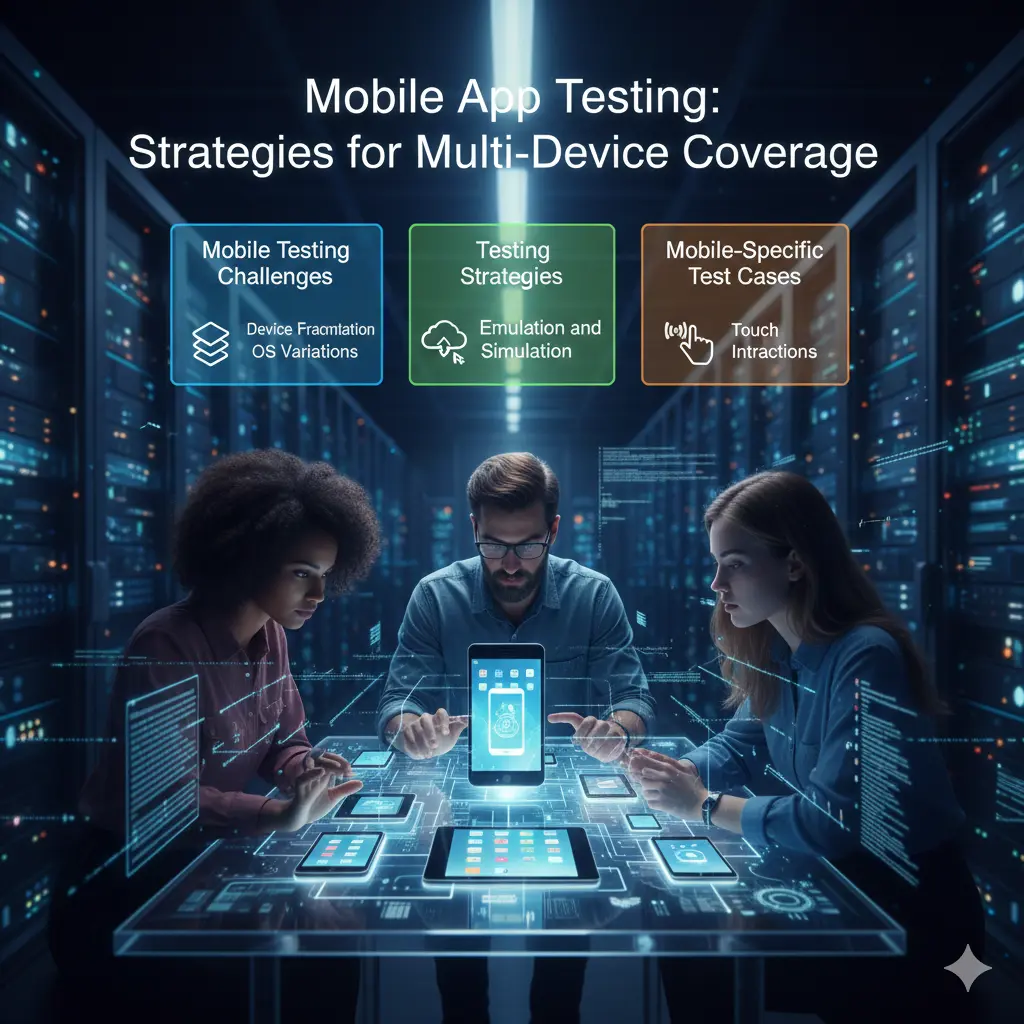
Mobile Testing Challenges
Understanding the unique challenges of mobile testing helps you develop effective testing strategies.
Device Fragmentation
Thousands of device models with different screen sizes, resolutions, and hardware capabilities require comprehensive testing strategies.
OS Variations
Different iOS and Android versions have varying behaviors and features that must be tested and accounted for.
Testing Strategies
Implement these proven strategies to ensure comprehensive mobile app coverage.
Cloud-Based Device Labs
Use services like BrowserStack, Sauce Labs, or AWS Device Farm to access real devices without maintaining hardware inventory.
Emulation and Simulation
Use emulators for development and initial testing, but always validate on real devices before release.
Mobile-Specific Test Cases
Consider these mobile-specific scenarios in your testing approach.
Network Conditions
Test app behavior on various network conditions: 4G, 3G, WiFi, and offline states to ensure robust connectivity handling.
Touch Interactions
Test touch gestures, multi-touch interactions, and ensure touch targets are appropriately sized for mobile devices.
Related Articles
Performance Optimization: Techniques That Actually Work
Discover actionable strategies to improve your web application's performance and user experience.
Getting Started with Web Testing: A Complete Guide
Learn the fundamentals of web testing, best practices, and essential tools to ensure your applications work flawlessly.
Related Services / Related Projects
Need Professional Testing Services?
Let our team of experts help you implement best practices and ensure your applications meet the highest quality standards.
Schedule Consultation